Hypnotherapy Services

Every condition listed below shares the same underlying mechanism: a nervous system that has learned to run a threat response and hasn’t been updated since.

The presenting problem differs. The neurological target doesn’t.

Sessions are available in person in Edinburgh and online.

Procrastination that feels physical.

The freeze response blocks the prefrontal cortex. Sessions restore access to deliberate action.

Burnout that rest doesn’t fix.

The nervous system is exhausted from chronic stress activation. Sessions regulate the response that’s keeping it there.

Decision paralysis.

The prefrontal cortex goes offline under threat load. Sessions rebuild the conditions for clear, committed thinking.

Perfectionism that stops progress.

A freeze response to the threat of being judged. Sessions interrupt the pattern before it stalls you again.

Anxiety that won’t switch off.

The amygdala is stuck on threat detection long after the original threat has passed. Sessions bring it back to baseline.

Sleep that doesn’t restore.

A nervous system is still running a stress response through the night. Sessions work on the activation that’s keeping the brain from fully switching off.

One-to-One Sessions

Most people who come to see me have already done a lot of work on themselves. They understand their patterns, sometimes in considerable detail. What hasn’t shifted is the behavior.
The prefrontal cortex, where conscious reasoning occurs, has limited access to the implicit memory systems that store habitual behavior. Knowing why you procrastinate doesn’t reach the part of the brain that drives it. Hypnotherapy does. By inducing a specific relaxed neurological state that reduces amygdala reactivity, session work can reach the implicit systems that deliberate thought bypasses. This is the clinical basis of solution-focused hypnotherapy, and why it produces changes that insight alone hasn’t managed.
What sessions look like
Every course starts with an initial consultation. A clinical conversation to identify what’s actually driving the pattern, and whether this approach is the right fit for your situation. From there, sessions run 60 minutes weekly and typically span 8 to 12 sessions.
Each session combines guided trance work with solution-focused dialogue. The trance work shifts the neurological conditions. The dialogue builds toward specific, concrete goals rather than an analysis of the past.
What I work with
The presenting issues vary, but they tend to cluster around a shared mechanism: the amygdala generating threat responses in situations that don’t warrant them, blocking access to the prefrontal processing needed for clear thinking and deliberate action. The freeze response. It manifests as Chronic procrastination in people who are otherwise highly capable. Decision paralysis: the options are clear, but choosing feels impossible. Burnout that doesn’t lift with rest. The inability to switch off without guilt pulls you straight back. Perfectionism functioning as avoidance. Overthinking that circles the same ground without resolving anything. Performance anxiety occurs before high-stakes situations regardless of preparation. Sleep disruption and its downstream cognitive consequences.

Group Sessions for Businesses

Most workplace performance problems are neurological before they’re operational. A team that can’t make decisions under pressure, that defaults to avoidance when workloads spike, or that has collectively stopped believing their effort will change outcomes is not a team with a motivation problem. The amygdala is generating threat responses that the prefrontal cortex can’t override, and that pattern will not be solved by a strategy day or a values workshop.
Solution-focused hypnotherapy addresses the underlying mechanism. Group sessions combine guided trance states, which reduce amygdala reactivity and lower cortisol levels, with structured, solution-focused dialogue that redirects attention toward concrete goals and existing capabilities. The result is a neurological shift in how teams process challenge and pressure, not a temporary morale boost.
What the sessions address
The presenting issues in most organisations cluster around the same core problems: chronic low motivation that doesn’t respond to incentives, decision paralysis in high-pressure roles, burnout that persists through annual leave, and a collective anxiety that makes risk-taking feel impossible. These aren’t cultural problems. They’re what happens when a team’s nervous system learns that effort leads to threat rather than reward.
Sessions are tailored to what your organisation is actually dealing with. Healthcare teams managing sustained emotional load work differently from tech teams under delivery pressure or finance teams carrying high-stakes decision weight. The neurological framework is consistent. The content is specific.
What sessions involve
Sessions run as onsite workshops, online, or in a hybrid format, depending on what works for your teams. Each program begins with a scoping conversation to identify the specific patterns affecting performance, followed by a structured series of group sessions that build on each other. Outcomes are tracked before and after the program across measurable indicators, including stress levels, engagement, and self-reported confidence in decisions.
The techniques are clinical, not motivational. Guided trance work, solution-building dialogue, exception-seeking, and scaling methods drawn from the solution-focused hypnotherapy evidence base. Participants leave with tools they can use independently, which is where the sustained change actually comes from.
I work with organisations on a bespoke basis. Get in touch to discuss what your team needs.

Individual & Group Sessions for Sports Teams
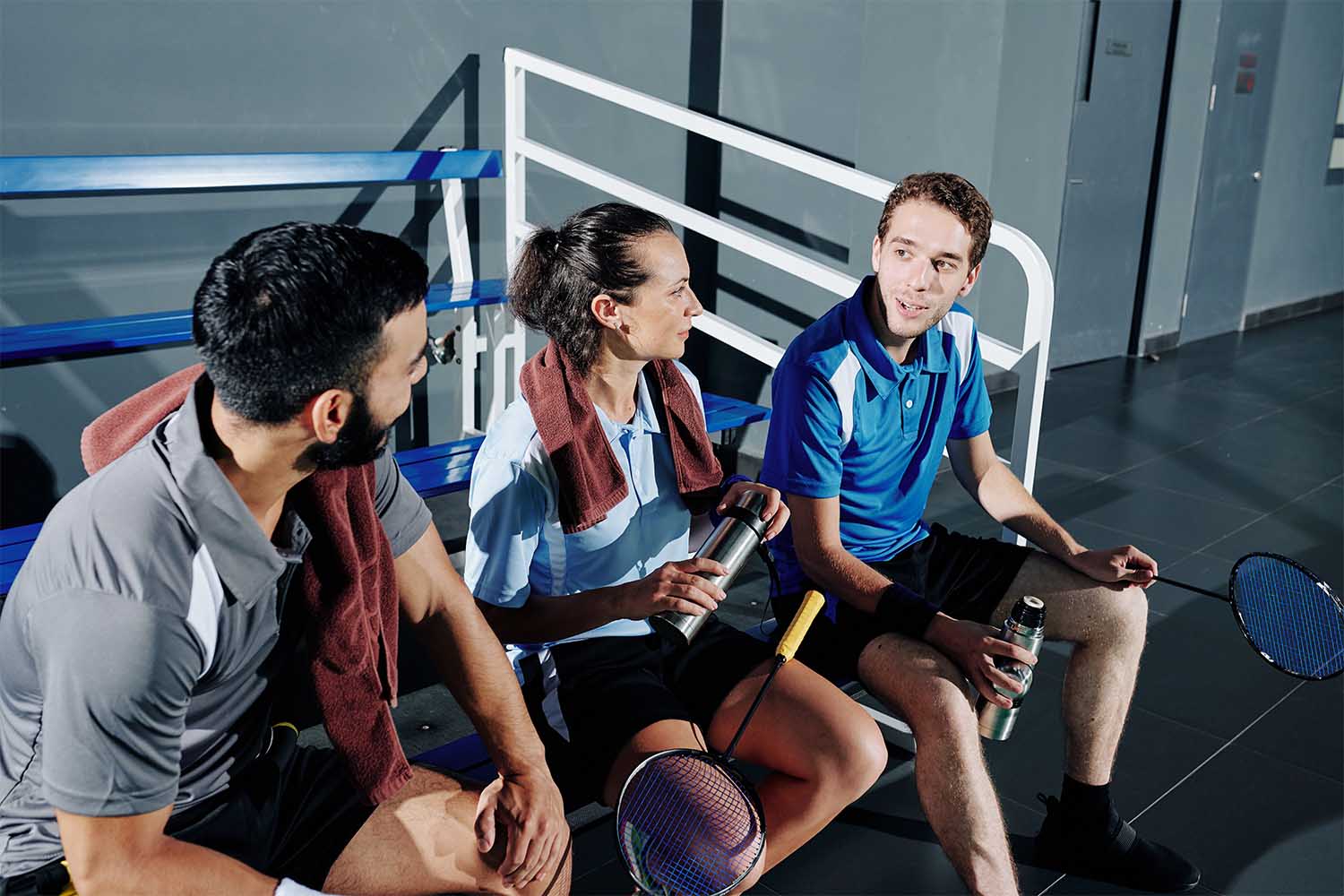
The difference between an athlete who performs under pressure and one who doesn’t isn’t usually physical. By the time someone reaches a competitive level, the physical preparation is broadly comparable. What separates them is what happens neurologically in high-stakes moments.
Under acute pressure, the amygdala triggers threat responses that divert resources from the prefrontal cortex. Decision-making slows. Muscle memory becomes harder to access. The athlete knows what to do and can’t execute. This is the freeze response, and it is trained.
Solution-focused hypnotherapy works by reducing amygdala reactivity through guided trance states, creating the neurological conditions for the prefrontal cortex to stay online when pressure is highest. Combined with solution-focused dialogue, the work builds a consistent internal state that athletes can access deliberately both before and during competition.
Individual sessions
Individual work is built around the specific pattern affecting performance. Pre-competition anxiety that doesn’t respond to routine. A technical block that appears under match conditions but not in training. Perfectionism that makes mistakes disproportionately costly. Motivation has flattened after injury or a difficult season.
Sessions run 60 minutes weekly. Each one combines trance-based mental rehearsal with structured goal-focused dialogue. Athletes leave with self-hypnosis techniques they can use independently as part of pre-competition preparation.
Group sessions
Group sessions address the collective patterns of a team. Teams that freeze under pressure, lose cohesion when results go against them, or carry accumulated stress across a season show the same amygdala-driven responses as individuals. The mechanism is the same. The intervention is adapted for a group context.
Sessions can run at your training facility, online, or in a combination of both. The program is scoped around what the team is actually dealing with rather than a fixed curriculum.
Get in touch to discuss what your athletes need.