


Eteri McKenzie, Solution-Focused Hypnotherapist, Trained in Cognitive Neuropsychology.
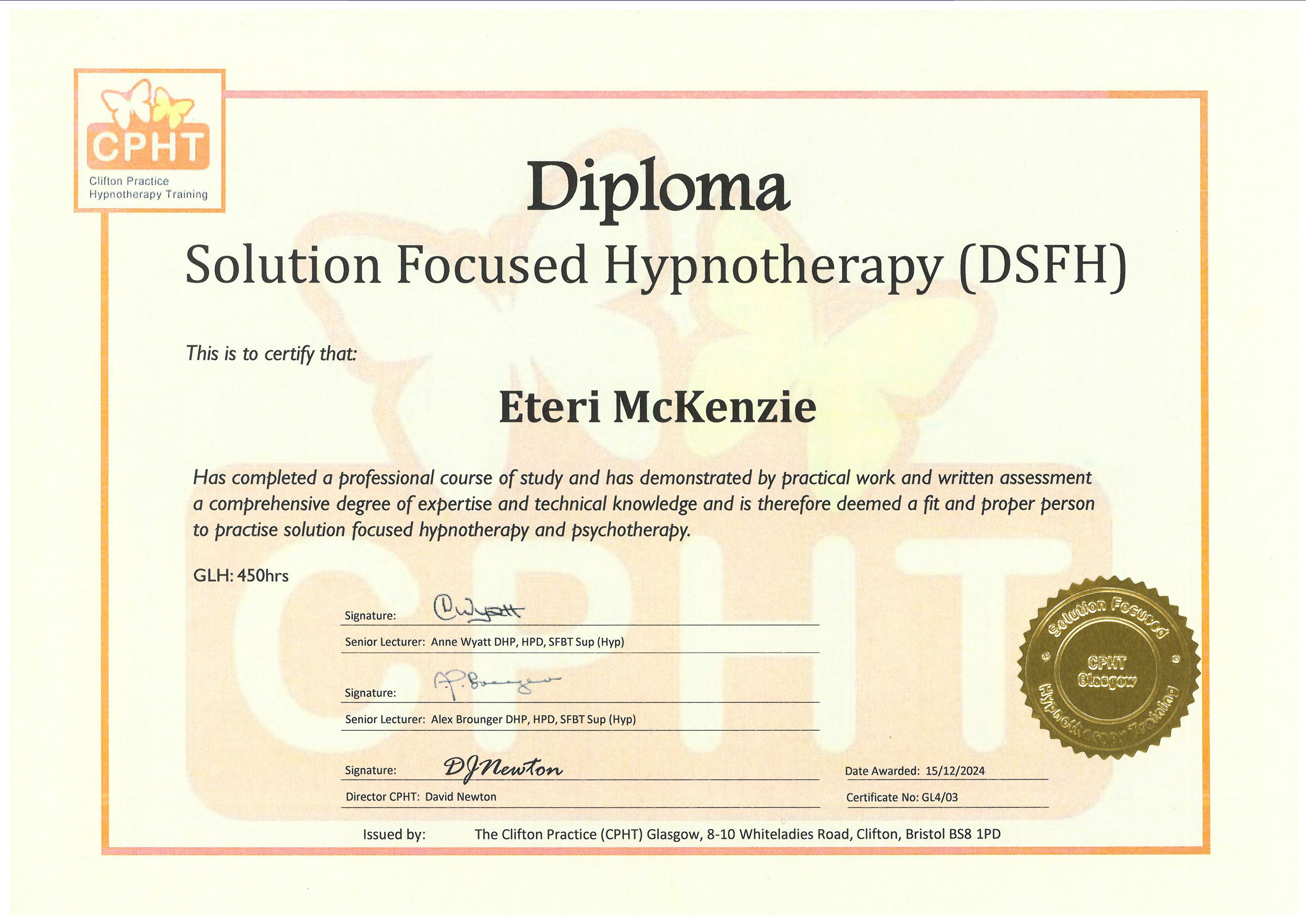
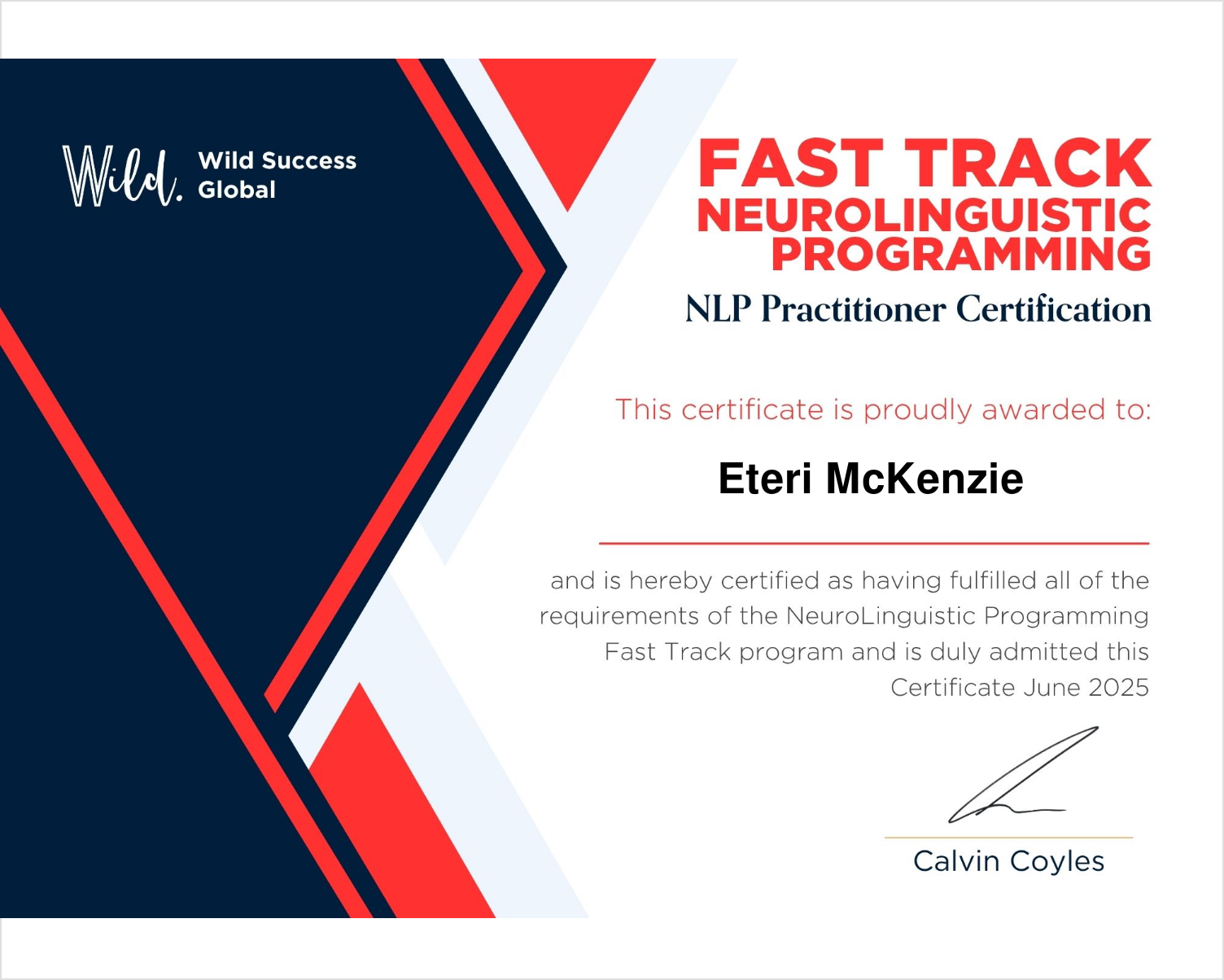
Diploma in Solution Focused Hypnotherapy (DSFH)
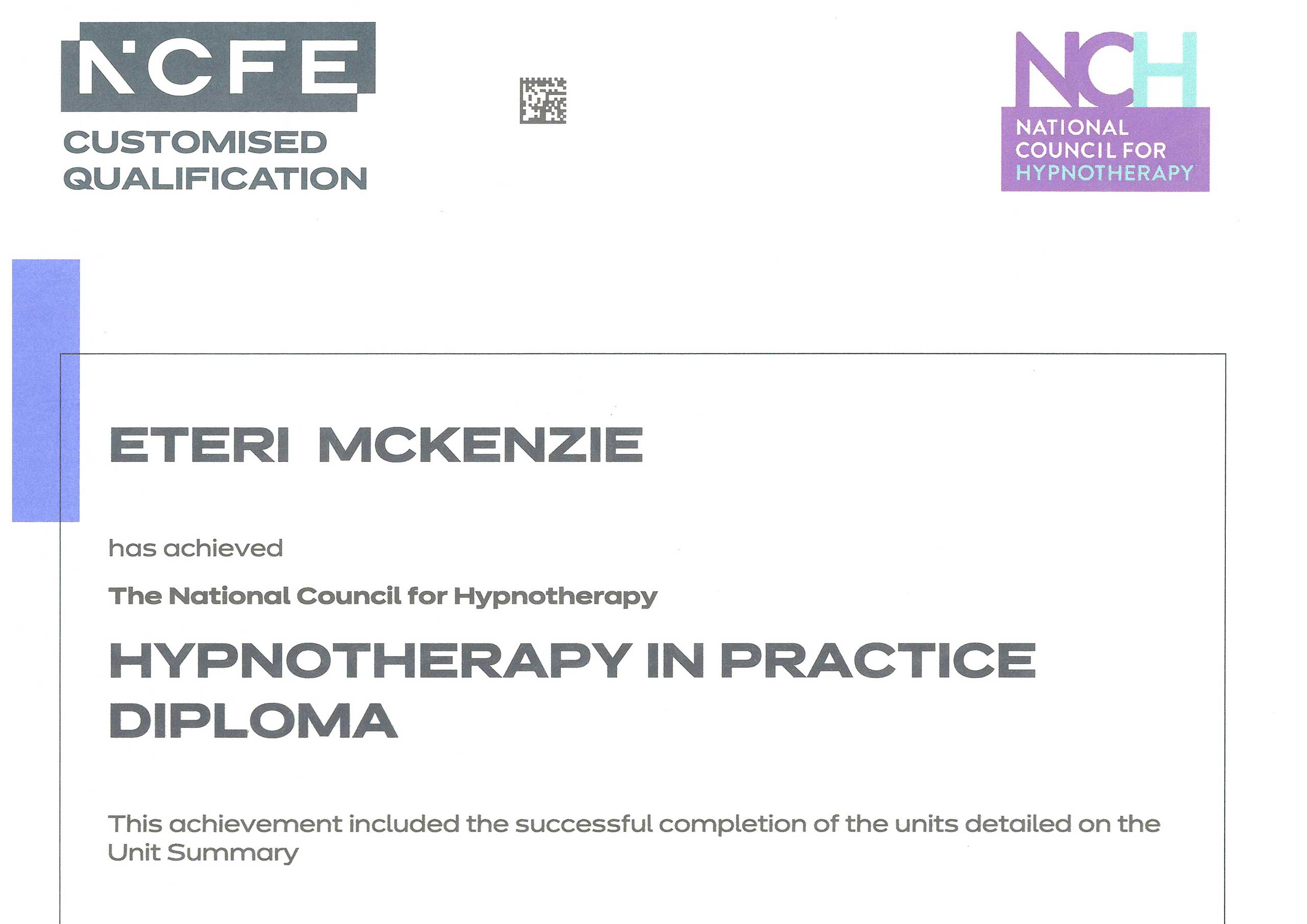
Hypnotherapy in Practice Diploma, NCH
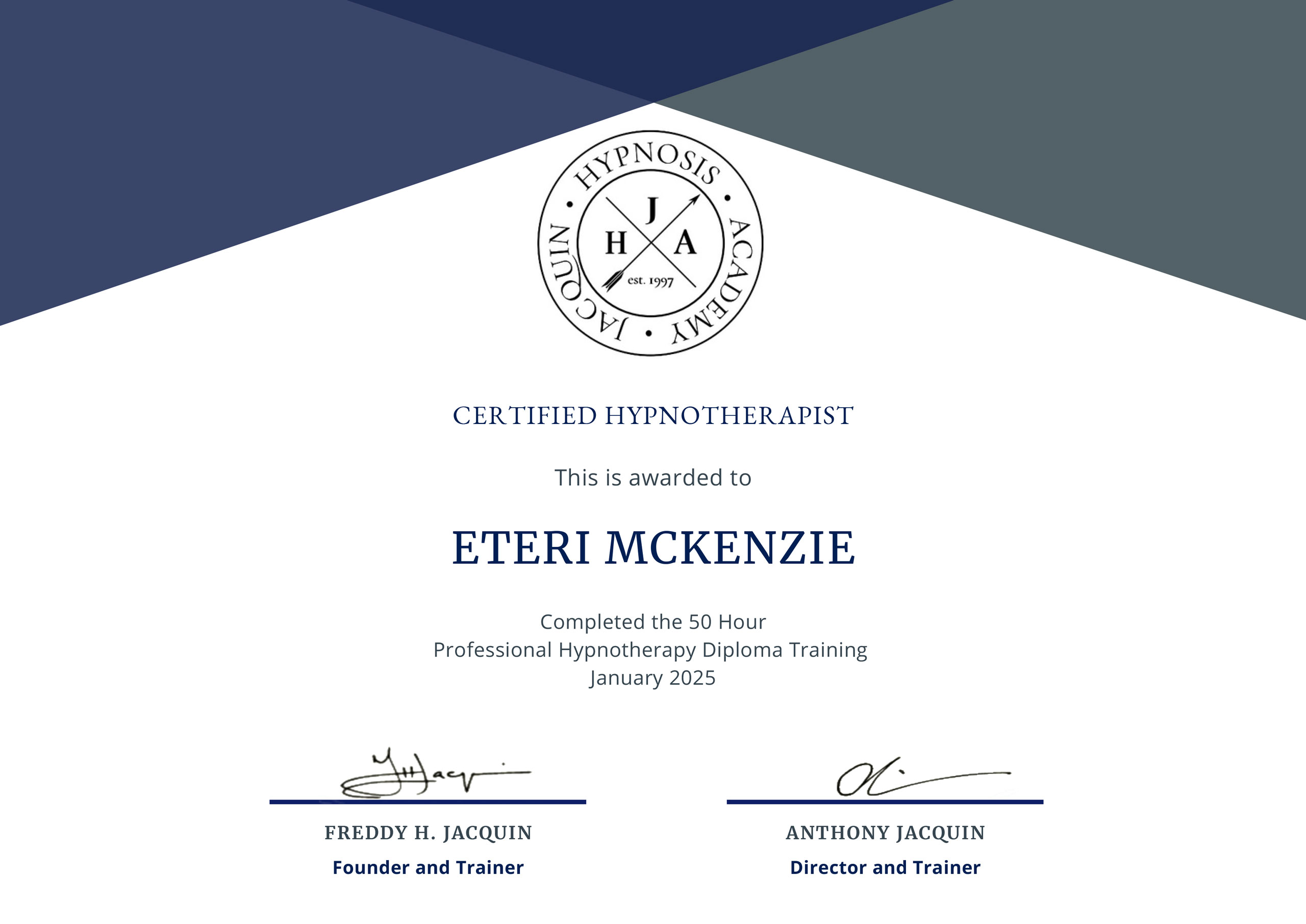
Certified Hypnotherapist, Jaquin Hypnosis Academy
MSc Human Cognitive Neuropsychology, University of Edinburgh
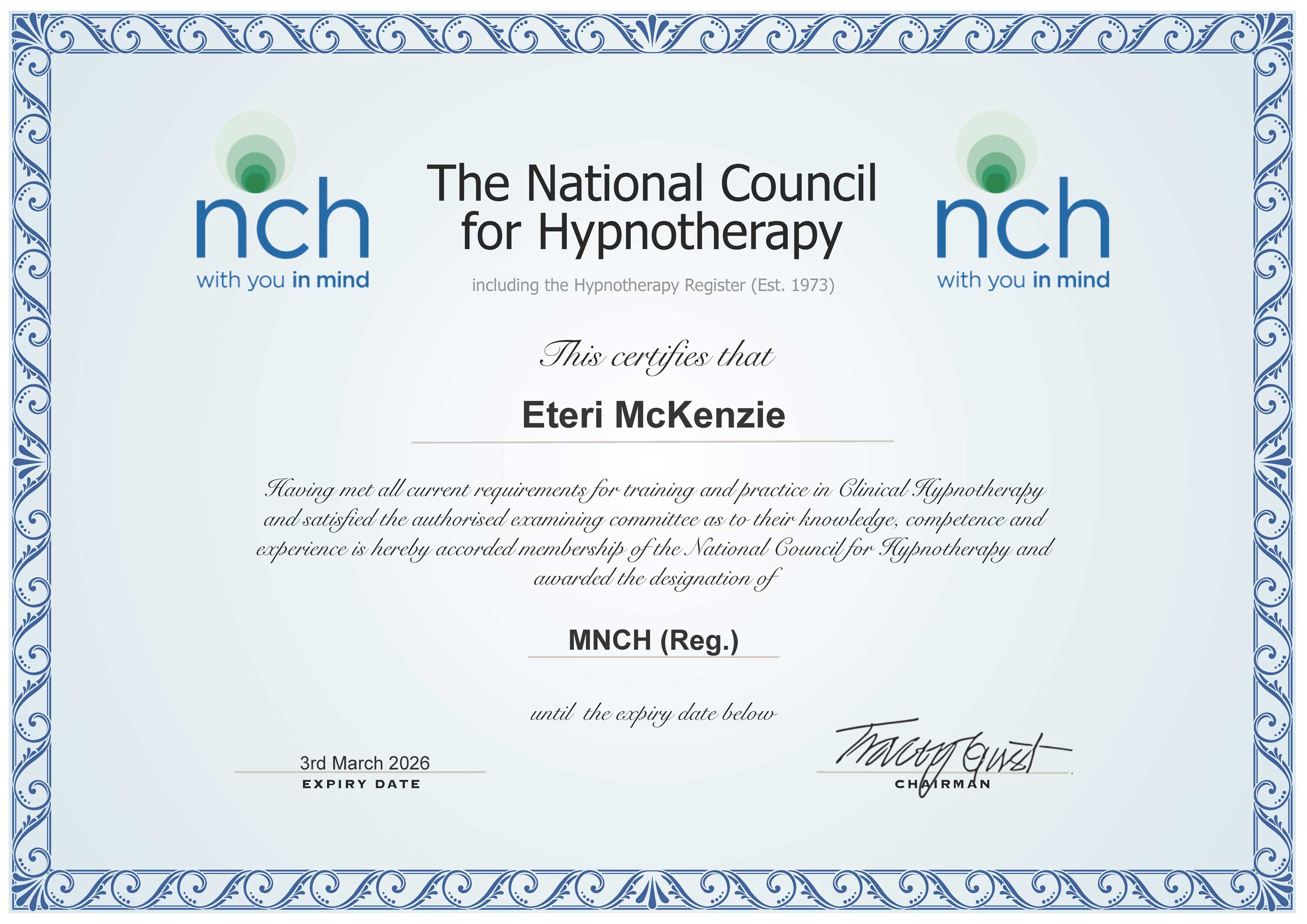
Registered with NCH, CNHC & ASFH
I’m Eteri. My clients are smart, self-aware people who have read Atomic Habits, done the therapy, tried journaling, meditation apps, and coaching. And they still can’t change. They describe it differently: procrastination that feels physical, a heaviness in the body that sleep doesn’t touch, starting things with real momentum and then stopping for no clear reason, overthinking that runs on a loop at 2 am, burning out repeatedly despite knowing better, understanding exactly what needs to happen, and watching themselves not do it. Most have spent years assuming it’s a discipline problem, a character flaw, something fundamentally wrong with them. What they’re actually describing is a brain stuck in a freeze response. They just don’t have that word for it yet.
That gap between knowing and doing isn’t a willpower problem. It’s a nervous system problem. When the brain is running a chronic stress response, the prefrontal cortex, where deliberate action, clear thinking, and motivation live, goes offline. Your brain is doing something very specific: running a protection response that once made complete sense but hasn’t been updated since. That’s not a character flaw. That’s just how threat circuitry works.
That’s where solution-focused hypnotherapy comes in. The sessions work at the level of the stress response itself: calming the amygdala, bringing the prefrontal cortex back online, and rebuilding the conditions your brain needs to actually act on what you already know. We don’t go digging through your past to do it. The work starts from where you are now.
What Happens in a Session
What Happens in a Session
The brain becomes plastic at 4 to 7 Hz. That is the only frequency range at which the patterns that brought someone to a first session can actually be rewritten.
Most people arrive having already built a detailed theory of what's wrong with them. They can trace it, name it, and explain it with impressive accuracy. The understanding is real. The pattern is still there. They sit down waiting for something different to happen, without knowing what different looks like neurologically.
Phase One: The Conversation
The questions are about what you want your life to look like, not why it looks the way it does now. That distinction matters neurologically. Solution-focused questioning activates the dorsolateral prefrontal cortex and initiates dopamine release. A brain running active threat surveillance cannot consolidate new patterns. The conversation is not a warm-up. It is the first phase of the neurological sequence.
Phase Two: Trance
Guided trance brings the brain into the theta range (4 to 7 Hz), the frequency the brain produces naturally in the moments before sleep. In theta, amygdala output reduces substantially. The prefrontal cortex remains lightly engaged. The hippocampus becomes available for memory reconsolidation, the process by which existing neural patterns can be accessed and rewritten rather than suppressed. The pattern is briefly writable.
In an ordinary waking state, the amygdala continuously monitors background threats. Every decision, every attempt to change a behaviour, happens against that signal. In theta, that signal quiets. The brain remains conscious and aware of the room, processing without its own defence system generating interference. This is why insight in an ordinary waking state produces understanding without behaviour change. The pattern is still running underneath it.
Hippocampal reconsolidation continues for roughly 48 hours after the session ends. Most clients notice it in how they respond to something, not during the session, but two days after. The session rarely feels like the moment it happened.
Eight to twelve sessions is the typical course, once a week. What was accessed in trance either integrates into a new pattern or restabilises into the existing one. Which direction it goes depends on what happens in that 48-hour window, and most people don't know it exists.
What Makes My Approach Unique
Most solution-focused hypnotherapists work from the same clinical model. The difference here is the neuropsychological depth behind it. Completing an MSc in Human Cognitive Neuropsychology at the University of Edinburgh while running an active clinical practice means the academic understanding and the session work inform each other directly. The framework I've developed, Freeze to Forward, is built on the specific neurological sequence that takes a brain from threat state to deliberate action. That sequence is the same across all clients. The application is specific to each one.
Who I Help
I work with founders and solopreneurs who are high-functioning by every external measure and running a threat pattern underneath. People who can perform under pressure but freeze on the decisions that actually move their business. People who understand their own psychology well enough to explain it to someone else, and still can't change it.

What To Expect
The first step is an initial consultation, usually around 50 minutes, where we establish what you're working with and whether the approach is the right fit. Sessions run weekly from there, each around 60 minutes. The typical course is eight to twelve sessions. You'll receive a self-hypnosis recording after the first session to use between appointments, which is part of how the reconsolidation window works in practice. Sessions are available in person in Edinburgh and online.
Qualifications
Qualifications
Registered with…

Book Your Free Discovery Call Today
“Our wounds are often the openings into the best and most beautiful part of us.”
Let's chat about your goals and how solution-focused hypnotherapy can help you live a life you love. Your future self is already cheering you on!
Eteri | Certified Clinical Hypnotherapist and Psychotherapist | Registered with NCH, CNHC & ASFH
P.S. Still wondering if hypnotherapy is right for you? Ask me about the science behind it—or share your biggest goal. Let's make it happen, one small step at a time.